

Conversations around the capabilities of AI and LLMs (Large Language Models) change every week. The GovWebworks AI Lab keeps us up to date with blogs on everything from the latest pilots and policy primers to AI agents doing real work inside government platforms.
The following roundup pulls together five pieces by our team on topics such as the ground-level discipline it takes to ship AI-assisted code safely, to the architectural shift toward agentic, task-oriented digital services.
Our latest perspective from developer Ryan Olsen looks at the guardrails that keep Claude Code reliable in production Drupal work with the kind of quiet, unglamorous safeguards that prevent the kinds of failures nobody blogs about until they’ve lived through one.
We also feature AI Lab founder, Adam Kempler, whose latest blog looks at how Drupal sites are evolving from using chatbots into orchestrated AI agents. He evaluates the tools reshaping application development, and cover the AI Lab’s earlier guidance on LLM benefits, risks, and government use cases. The groundwork he has covered makes today’s agentic leap possible.
Read on for the full details.
Claude Code Guardrails, Not Guesswork

How I Ship Drupal Features with Claude Code
By Ryan Olsen
When people picture Claude code going wrong, they usually picture something dramatic such as a deleted production table or a leaked secret. In practice, the failures I run into are quieter and easier to miss. It’s the coding equivalent of asking an AI assistant to edit a document: you watch it happen right in the chat, everything looks finished, and only later do you check the actual file and find it untouched, because the edit only ever landed in a temporary working copy, not the real thing.
In my experience, AI coding tools are only as good as the guardrails around them. By guardrails, I don’t mean in the abstract, “be careful” sense, but concrete, written-down, version-controlled guardrails that tell the AI what your team already knows..
From Chatbots to AI Agents in Drupal
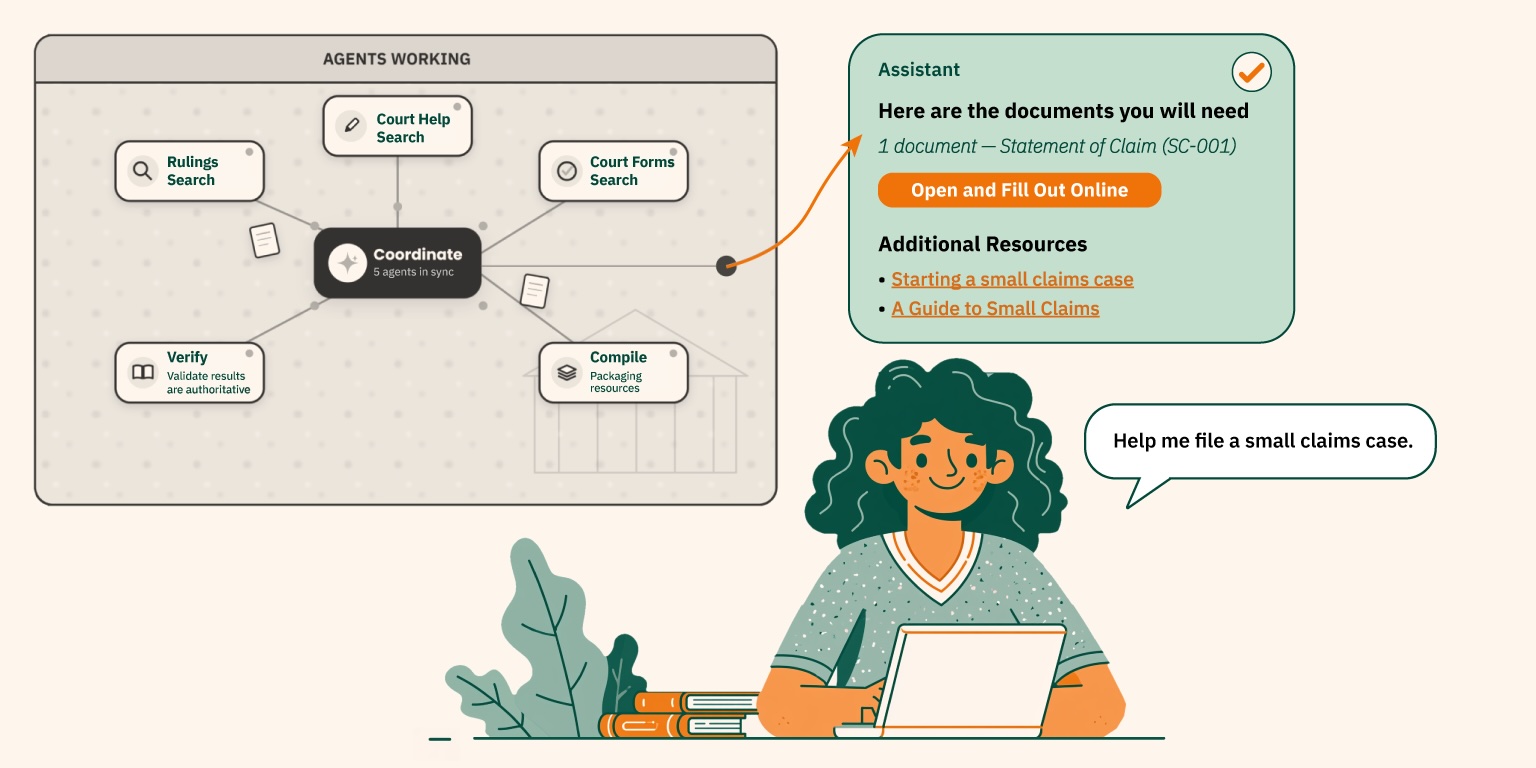
Moving beyond simple chatbots to orchestrated AI agents powered by your organization’s content
By Adam Kempler
Government websites have traditionally been designed around navigation. Visitors use menu systems, search boxes, and links to find and browse content. Chatbots made the experience more conversational, but frequently, are just an alternative way to find content. Agentic solutions, called AI agents, on the other hand, help users accomplish goals and tasks. With an agent architecture you can define multiple agents, each an expert in a particular domain.
For example, a visitor might ask, “I need to renew my fishing license and find out when trout season begins.” An orchestrator agent can route the request to specialized licensing and regulations agents, retrieve information from trusted sources, and return one coordinated response. This marks a shift from websites that simply publish information to intelligent digital services that understand user intent and help people accomplish meaningful tasks.
In this article, we’ll look at how Drupal’s AI and AI Agents modules can power the shift to agentic architecture by complementing existing navigation based websites. We’ll also look at why Drupal is an ideal platform for enterprise agentic experiences that are grounded in your organization’s structured content, APIs, and workflows.
Leveraging AI for Application Development

AI Lab analysis of tools and services that enhance application development
By Adam Kempler
AI tools and services are transforming application development, from Single Page Applications (SPAs) to more complex multi-page applications. The GovWebworks AI Lab has been assessing the value of these tools by testing them on internal applications such as project management dashboards and content migration tracking systems.
We prefer to test on internal applications because they entail lower overall risk and require less optimization than public-facing applications. This allows for quick prototyping and rollout of MVPs without the rigorous testing and refinement needed for large-scale client use.
This article provides a comparative analysis of some leading AI tools and services that streamline small application development such as SPAs, enabling the development of sophisticated, user-friendly applications with increased efficiency. To this end, the chart at the end lists AI tools and services that stood out in research and in use cases as viable options for developing applications.
Large Language Model Applications for Government

AI Lab update on the benefits, risks, and emergent guidelines for LLMs in the public sector
By Adam Kempler
Generative AI tools like ChatGPT are revolutionizing how we create content and interact with enterprise applications. These Large Language Models (LLMs) are trained on massive amounts of data in order to understand and respond to natural language instructions called prompts. (Try this one: “Write a Rolling Stones song about LLMs.”) The rise of AI is not unlike that of the automobile in the last century. Though the first cars were dangerous, unreliable, and lacked laws around use, these negatives were outweighed by the potential economic and social benefits. To stay competitive, it’s imperative we face the challenges and define appropriate guidelines.
Since many of our government clients are considering the use of LLMs, the GovWebworks AI Lab has been tracking the benefits, risks, and emergent Federal and State guidelines. To facilitate the decision-making process around LLM adoption, we’ve compiled the following primers.
9 Gov Tech Use Cases for LLMs

AI Lab’s top picks for Large Language Model applications for government agencies
By Adam Kempler
Unlike in traditional development, where each step to perform a task is explicitly defined in code, with LLMs we tell the assistant what we want to accomplish using prompts to define the desired outcome. These conversational interfaces can work as a universal interface for applications. Combined with simple drag-and-drop interfaces for composing applications, a new generation of innovation and application development will occur as more individuals within an organization can bring ideas to fruition.
Most applications and services now have an LLM integration for direct use and as plug-and-play for composability with other LLM solutions and autonomous agents. The following LLM root applications are ones we find to be most valuable for our government clients. We include details on how each of these applications work and how risks of adoption can be mitigated.
Learn more
The GovWebworks AI Lab is here to keep our clients updated on the latest changes and recommendations concerning AI and LLMs. For further exploration of these topics, the AI Lab can help clients identify the right value-based solutions that leverage artificial intelligence for your agency. Whether it’s developing a pilot program or a large-scale integration, we can plan and implement solutions that meet your business objectives.
Want to learn more about AI can do for your company? We’d love to hear from you.
- Contact GovWebworks for a free demo