

Accessibility is no longer a future initiative for state agencies, it is an immediate obligation. The April 24, 2026 ADA Title II deadline mandates public-sector organizations to ensure their digital services meet WCAG 2.1 Level AA requirements or risk falling out of compliance.
This urgency, and the opportunity it creates, was captured in our recent post, Accessibility for April 2026 and Beyond: Lessons from M-Enabling on making the journey the destination with inclusive design, by David Read. Drawing on insights from the M-Enabling Summit and years of hands-on accessibility work with state agencies, the post reinforces the fact that while meeting the 2026 mandate is essential, sustainable accessibility is ongoing commitment.
At GovWebworks, accessibility is not a last-minute checklist or a surface-level fix; it is embedded into how we design, build, audit, and modernize government websites and applications, with a focus on real usability for real people.
Below are some examples of how we help agencies meet compliance while building systems that remain accessible, resilient, and trusted well beyond the deadline.
Colorado Avalanche Information Center
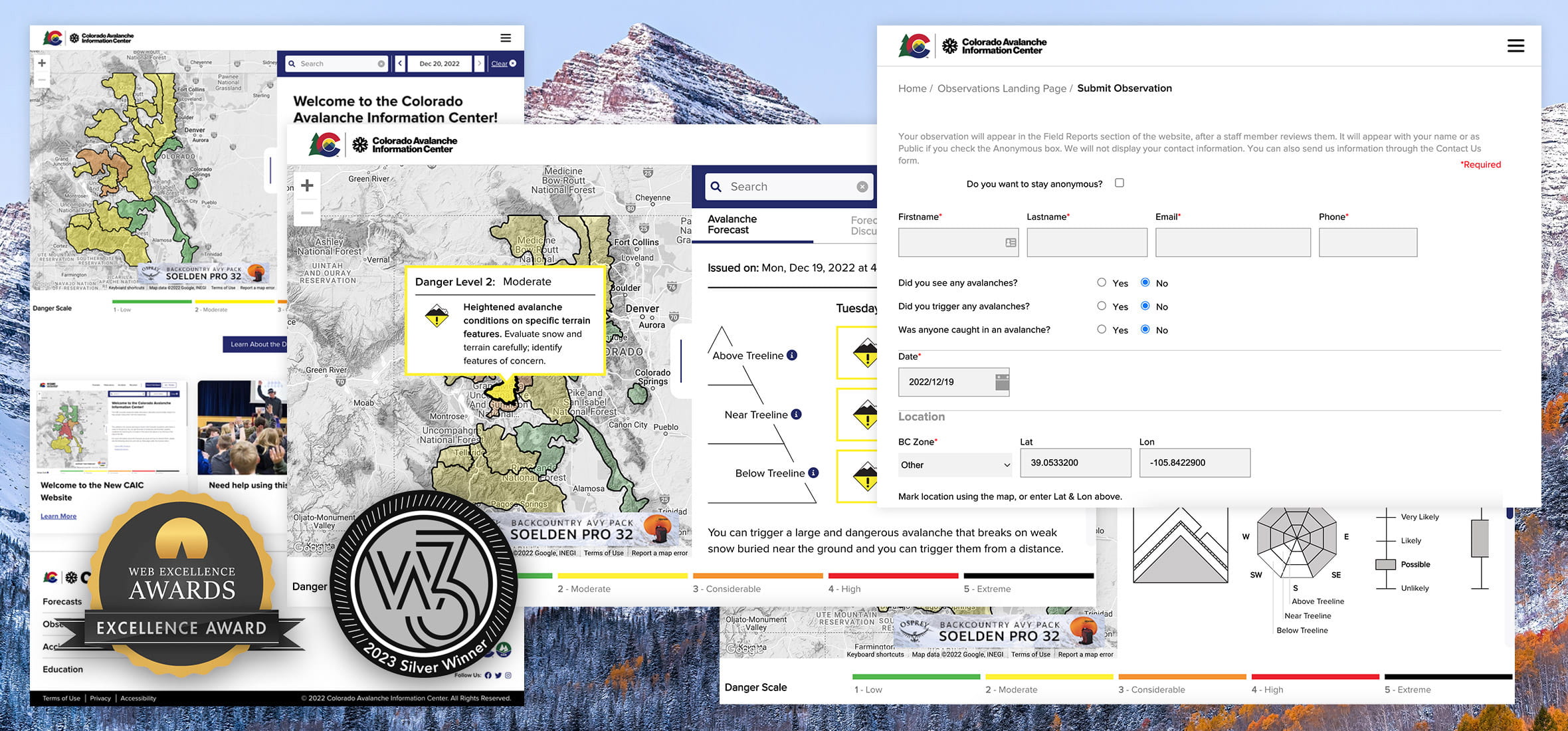
To enhance public safety in avalanche-prone Colorado, the Colorado Avalanche Information Center (CAIC) partnered with GovWebworks to modernize its site, making avalanche data accessible and user-friendly. CAIC needed an updated CMS and improved data presentation to better inform and protect users. GovWebworks implemented a Drupal CMS with a custom, mobile-friendly interface that integrates the AvIDfx database, providing real-time avalanche forecasts. The site’s focal map allows users to interact with color-coded polygons and sliding information trays that display avalanche risk levels, with accessibility features like semantic markup, alt text, and focus states for assistive technologies. CAIC did a third party accessibility audit and GovWebworks remediated issues to meet ADA- and Section 508–compliance. The site not only enhances public safety but also won W3 and Web Excellence Awards in 2023.
- CAIC Case Study
- CAIC Website
- Blog about CAIC: Putting Snow Safety First
New Hampshire Judiciary

The New Hampshire Judicial Branch (NHJB) sought to enhance and improve its website and online presence for self-represented litigants. GovWebworks provided a comprehensive discovery, planning, and advisory role to enable long-term, independent execution by internal teams. Our work began with an in-depth review of the legacy website and operating context, followed by end-user research that included a survey focused on self-represented litigants. Insights from this research informed a reimagined information architecture and navigation model, alongside a detailed accessibility assessment aligned with WCAG requirements. We also delivered clear planning and scoping guidance for content updates, technical recommendations, and updated design concepts for priority components and page types.
All findings and recommendations were documented through a series of research reports, architectural diagrams, an accessibility remediation plan, a content strategy, and visual design mockups. These deliverables were synthesized into a single, executive-ready report presented to NHJB leadership to support informed decision-making and next-step execution.
Idaho Department of Health and Welfare
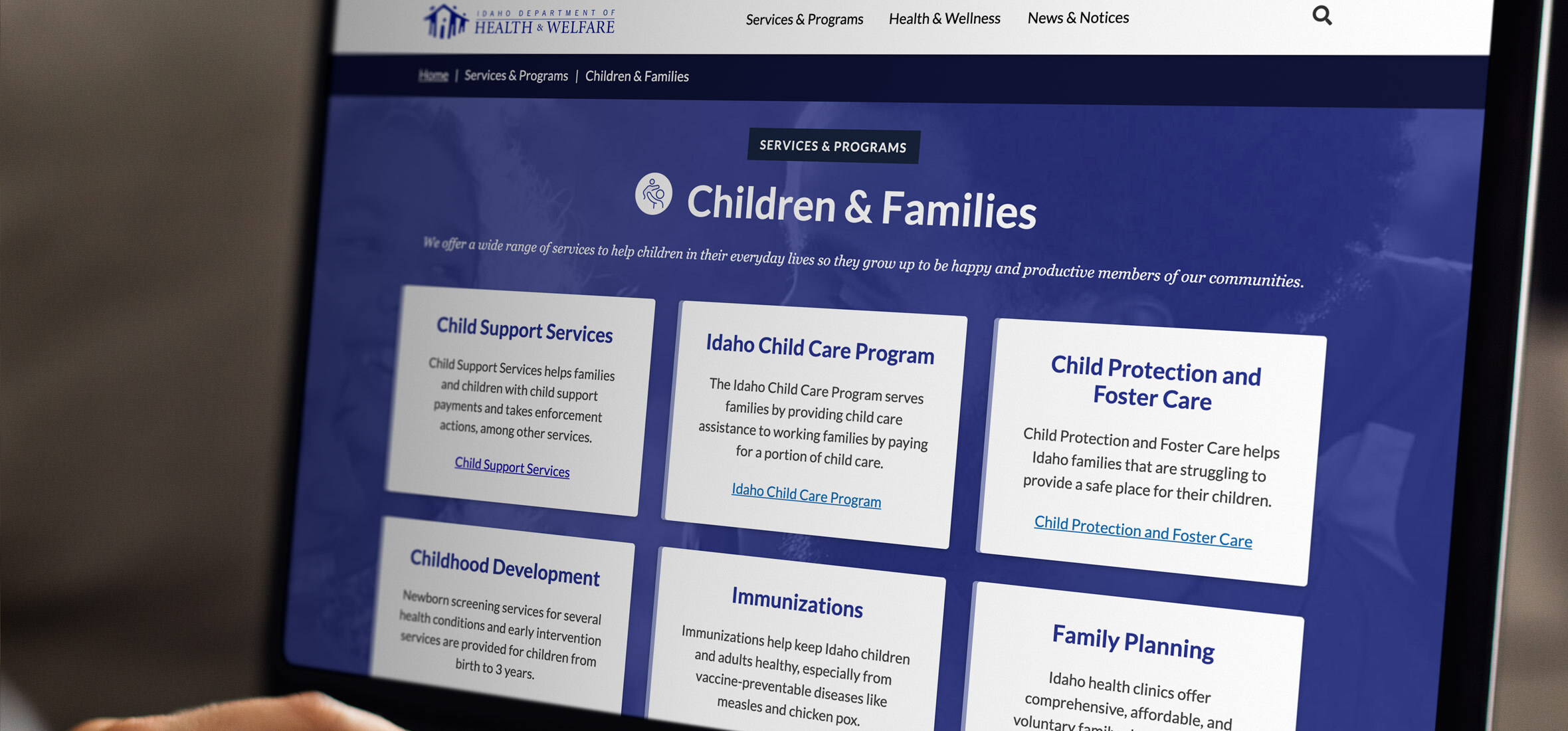
To modernize its outdated and content-heavy website, the Idaho Department of Health and Welfare (IDHW) partnered with GovWebworks to implement a streamlined, Drupal-based solution using the CiviServ platform. The redesign focused on user experience, mobile optimization, and compliance with ADA and state cybersecurity standards. A major Drupal highlight was the consolidation of over 1,000 pages down to 500 through a curated content migration process, improving clarity and access. The new site architecture uses flexible Drupal templates and components tailored to different audiences—Providers, Programs & Services, and Health & Wellness—enabling IDHW to maintain content efficiently and present information clearly without technical support. As part of the project, GovWebworks did an accessibility audit that addressed and remediated issues to meet ADA- and Section 508–compliance.
Missouri Department of Transportation
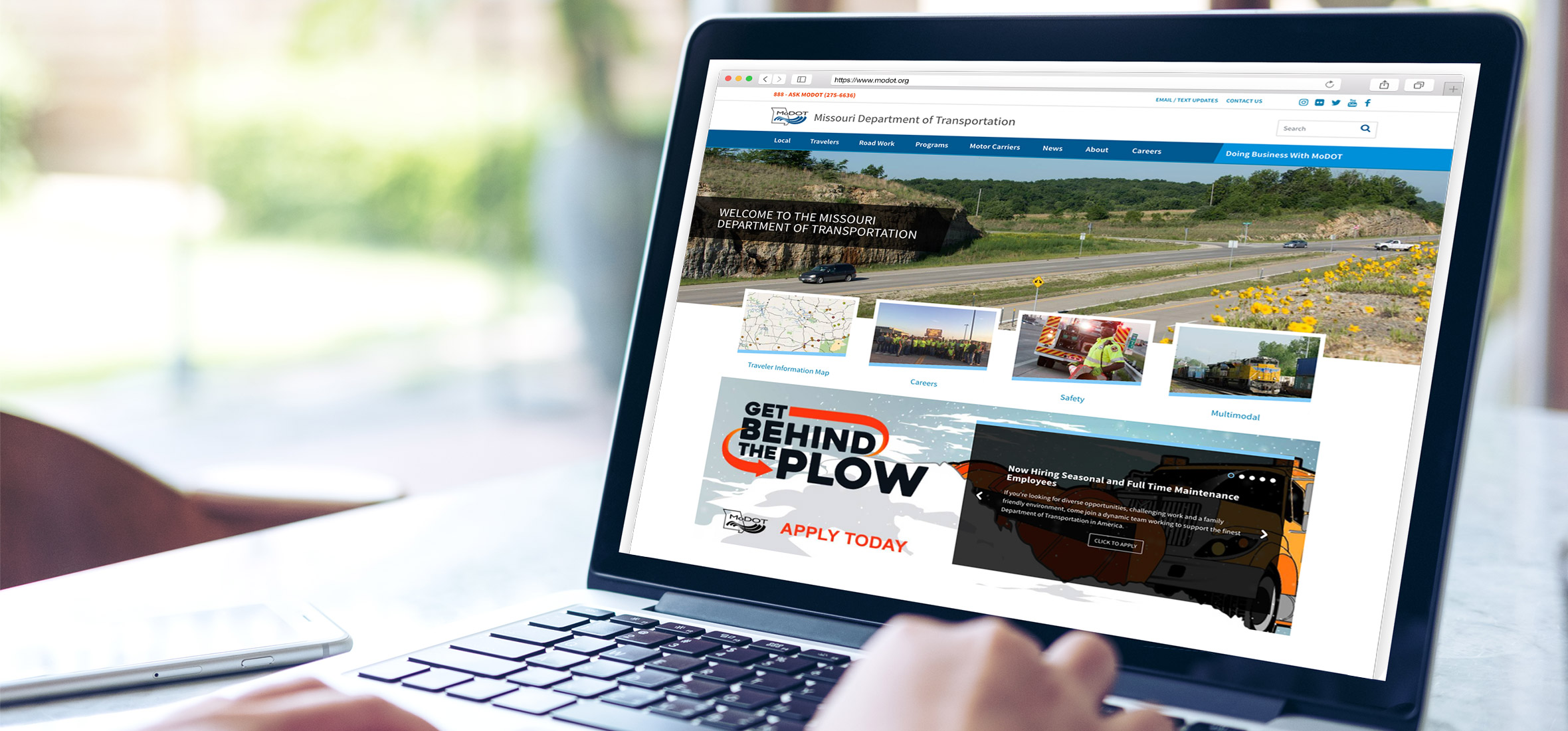
To modernize its decade-old, non-responsive website and improve content management, the Missouri Department of Transportation (MoDOT) partnered with GovWebworks for a full Drupal rebuild. The new Drupal-based platform resolved long-standing challenges by consolidating more than 30 unique page layouts into just two highly configurable content types, paired with a custom GUI-driven page builder. This allowed over 50 non-technical content editors to update and manage site content independently, improving speed and consistency. Key Drupal highlights include custom modules for content workflows, Solr-powered faceted search, topic-based permission controls for decentralized content governance, and API integrations for GIS and data feeds. The result is a fully accessible, mobile-responsive, and scalable platform that supports MoDOT’s mission to provide reliable and user-friendly transportation information to millions of annual site visitors. GovWebworks did an accessibility audit that addressed and remediated issues to meet ADA- and Section 508–compliance.
Minnesota Department of Employment and Economic Development
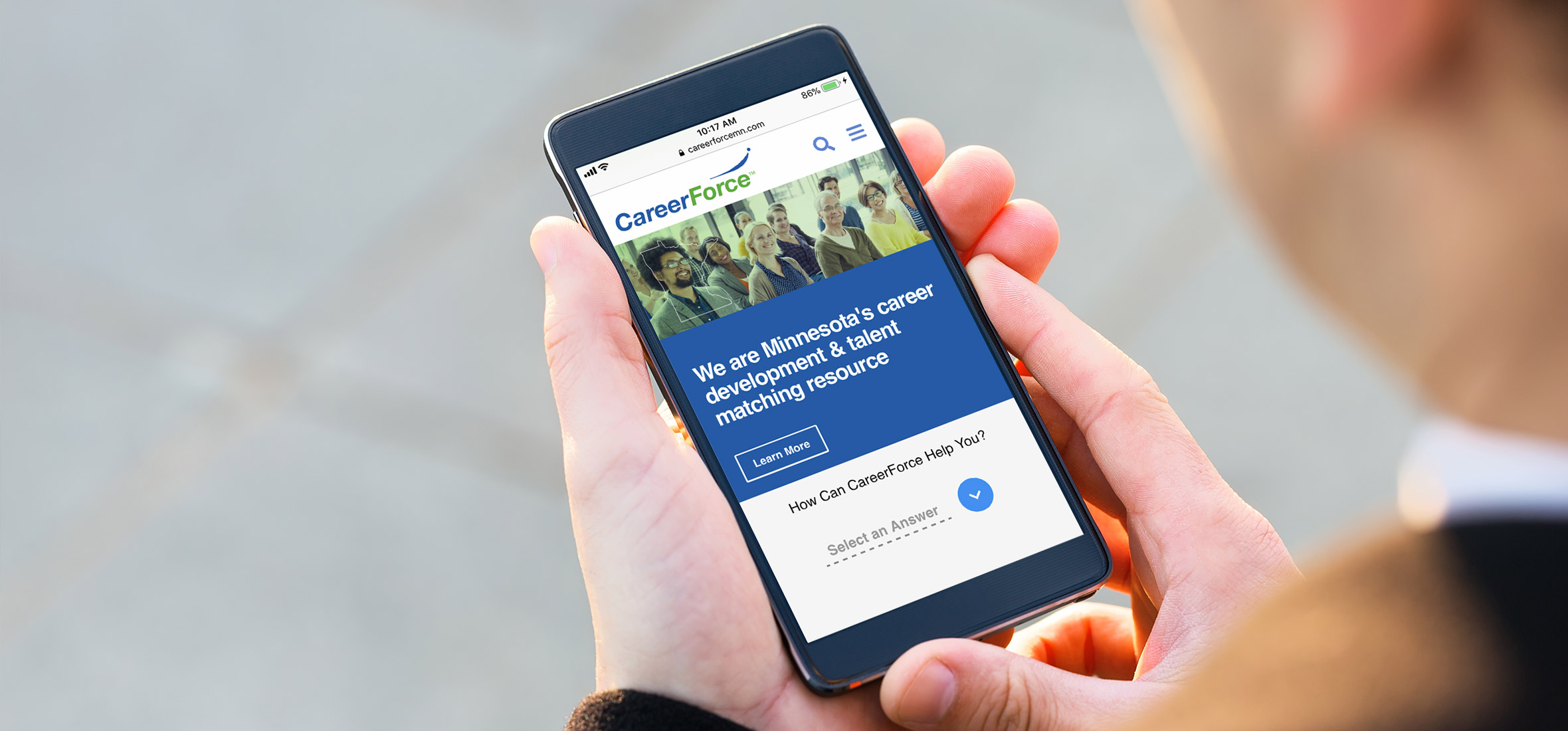
In response to a statewide need for a centralized employment and workforce services portal, the Minnesota Department of Employment and Economic Development (DEED) partnered with GovWebworks to develop CareerForceMN. Leveraging a proprietary Drupal-based SaaS platform, the project accelerated development through reusable components, scalable architecture, and configurable features tailored to DEED’s unique service model. The platform integrates diverse data sources and dynamically personalizes content for job seekers, employers, and workforce professionals based on user profiles. Drupal’s flexible content types and taxonomy system enabled efficient structuring of resources, training tools, and support services, while agile development ensured iterative testing and refinement. Launched in late 2018, the Drupal-powered CareerForceMN site now provides Minnesotans with a modern, ADA- and Section 508–compliant user-centric portal to advance workforce engagement and economic opportunity. As part of the project, GovWebworks did an accessibility audit and addressed and remediated issues.
Washington Public Disclosure Commission

GovWebworks partnered with the Washington Public Disclosure Commission to deliver a modern, user-centered citizen portal that supports transparency and public access to campaign finance and lobbying information. The project involved migrating from a proprietary CMS to an enterprise Drupal platform designed to handle complex, high-volume data and serve a diverse user base. Through a redesigned, activity-focused information architecture, color-coded visual system, enhanced Solr-powered search, and integrations with external data sources, the new site makes it significantly easier for citizens to find and interpret key regulatory information. Launched in April 2016, the ADA- and Section 508–compliant site improved usability, strengthened open-government goals, and empowered Commission staff to manage content more efficiently with contributions from non-technical stakeholders.
Learn more
Want to learn more about how we can help your agency? We’d love to hear from you.
- Contact us with any questions
- See GWW clients: Portfolio of work
- Visit us on social media: LinkedIn, Facebook, X, Instagram